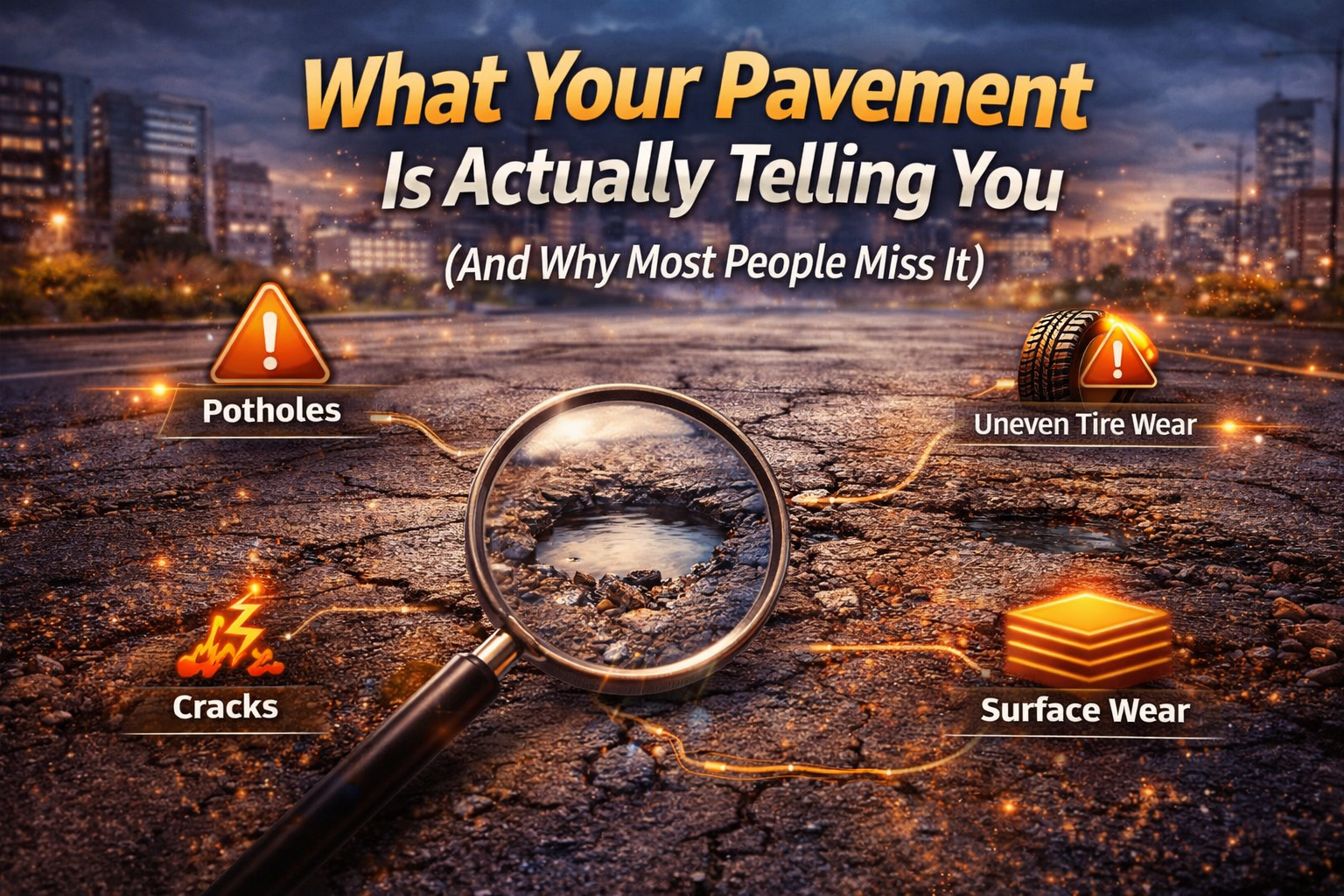
There’s a language that every paved surface speaks, and most property owners only learn to read it when it’s too late. A small crack becomes a network. A low spot becomes a pond after every rainstorm. What looked like a cosmetic issue in spring turns into a full replacement project by fall. The surface beneath your wheels, your tires, your feet it’s constantly communicating. The question is whether anyone’s listening.
Understanding that language isn’t just useful for contractors. It’s genuinely valuable for homeowners, property managers, and anyone responsible for maintaining a paved surface long-term. Because the difference between a 10-year pavement and a 25-year pavement often isn’t the material used. It’s the decisions made in the years between installation and failure.
The Hidden Life Beneath the Surface
Most people think of pavement as what they see a flat, dark layer of asphalt or a solid pour of concrete. But that visible layer is only the final chapter of a much longer story. Underneath it lies a carefully prepared base: compacted gravel, graded soil, and in some cases drainage infrastructure that directs water away from the foundation.
When pavement fails early, it’s almost never the top layer’s fault. It’s what happened or didn’t happen beneath it. A base that wasn’t properly compacted will shift under load. Soil that wasn’t graded correctly will hold water against the underside of the slab. Over time, that moisture works its way into the structure, especially in climates like northeastern Pennsylvania where freeze-thaw cycles are a seasonal reality.
Every winter, water that has seeped into small voids expands when it freezes. That expansion pushes against the pavement from the inside. Come spring, it contracts again but the pavement doesn’t return to its original position. That’s how hairline cracks become wide fractures, and how a structurally sound surface from five years ago becomes a liability today.
Reading the Warning Signs
Pavement doesn’t fail all at once. It gives you time if you know what to look for.
Alligator cracking is one of the most recognizable signs of base failure. The surface develops a pattern that looks like interconnected scales, usually concentrated in areas with the highest load. This isn’t a crack-fill situation. It signals that the foundational support underneath has been compromised and the surface layer is flexing beyond its tolerance.
Rutting appears as depressions that follow wheel paths, particularly in parking areas or along frequently traveled routes. It suggests the base material has shifted or that the asphalt mix wasn’t engineered for the traffic load it’s receiving.
Raveling when the surface starts to look rough and gravelly, almost as if it’s dissolving indicates that the binder holding the aggregate together is breaking down. This is often accelerated by UV exposure and standing water, both of which attack the asphalt’s cohesion over time.
Edge cracking forms along the perimeter of driveways and parking lots, usually where there’s no structural support beyond the paved edge. Without proper borders or curbing, water infiltrates from the sides and undermines the base in the most vulnerable zones.
Each of these patterns tells a specific story. And reading that story correctly determines whether a repair will actually hold or simply delay a larger problem.
Why Local Knowledge Changes Everything
Paving isn’t a universal formula. What works in Arizona fails in Pennsylvania. The soil composition, drainage patterns, seasonal temperature swings, and average precipitation all shape how a pavement performs over its lifetime. A contractor who has spent decades working in a specific region accumulates knowledge that no manual can fully capture.
This is particularly true in areas like Avoca, where clay-heavy soils and hard winters create a specific set of challenges. Knowing how to grade for drainage in this terrain, which base depths hold up under local frost lines, and how to account for spring thaw saturation these are the details that separate pavement that lasts from pavement that doesn’t.
That regional expertise is part of what makes working with a genuinely local Paving Contractor Avoca residents trust so valuable. The best contractors in any area aren’t just executing a standard process. They’re applying decades of site-specific experience to every project they take on.
Maintenance as a Philosophy, Not a Reaction
The most expensive paving mistake isn’t choosing the wrong contractor. It’s treating maintenance as something you do after problems appear rather than before. Sealcoating, crack sealing, and drainage maintenance are significantly less expensive than they sound when measured against the alternative: premature replacement.
A sealcoated surface, properly applied every few years, resists the UV degradation and water intrusion that accelerate failure. Crack sealing done when cracks are still narrow and isolated prevents water from reaching the base layer. These aren’t emergency measures. They’re investments in the expected lifespan of a surface you’ve already paid to install.
The irony is that most property owners who skip routine maintenance do so to save money in the short term, only to spend far more when the neglected surface finally gives out. Pavement that receives consistent maintenance routinely outlasts unattended surfaces by a decade or more.
The Right Questions to Ask Before Any Project
Whether you’re planning a new installation or evaluating repairs on an existing surface, the quality of the outcome begins with the questions asked before a single piece of equipment arrives.
How deep will the base be? How will drainage be handled? What mix design is appropriate for the expected traffic load? Will the edges have structural support? What’s the recommended maintenance schedule after installation?
A contractor who answers these questions clearly and in plain language without evasion or generic reassurances is almost always one who understands what they’re doing and stands behind their work. The surface is only as good as the conversation that precedes it.
Pavement speaks. The contractors who listen are the ones whose work lasts.